




Model Context Protocol: the bridge between LLMs and enterprise systems
What it’s all about
What is the Model Context Protocol?
How does the Model Context Protocol work?
How can companies benefit from the Model Context Protocol?
What support does ti&m provide?
What is the Model Context Protocol?
What is the Model Context Protocol (MCP)?
The Model Context Protocol is an open standard. Via MCP, AI applications that use large language models can interact directly with other systems. These systems can be local or external; for example, CRMs, ERPs or knowledge databases. The major benefit of MCP is that there is no need for a separate interface for each system.
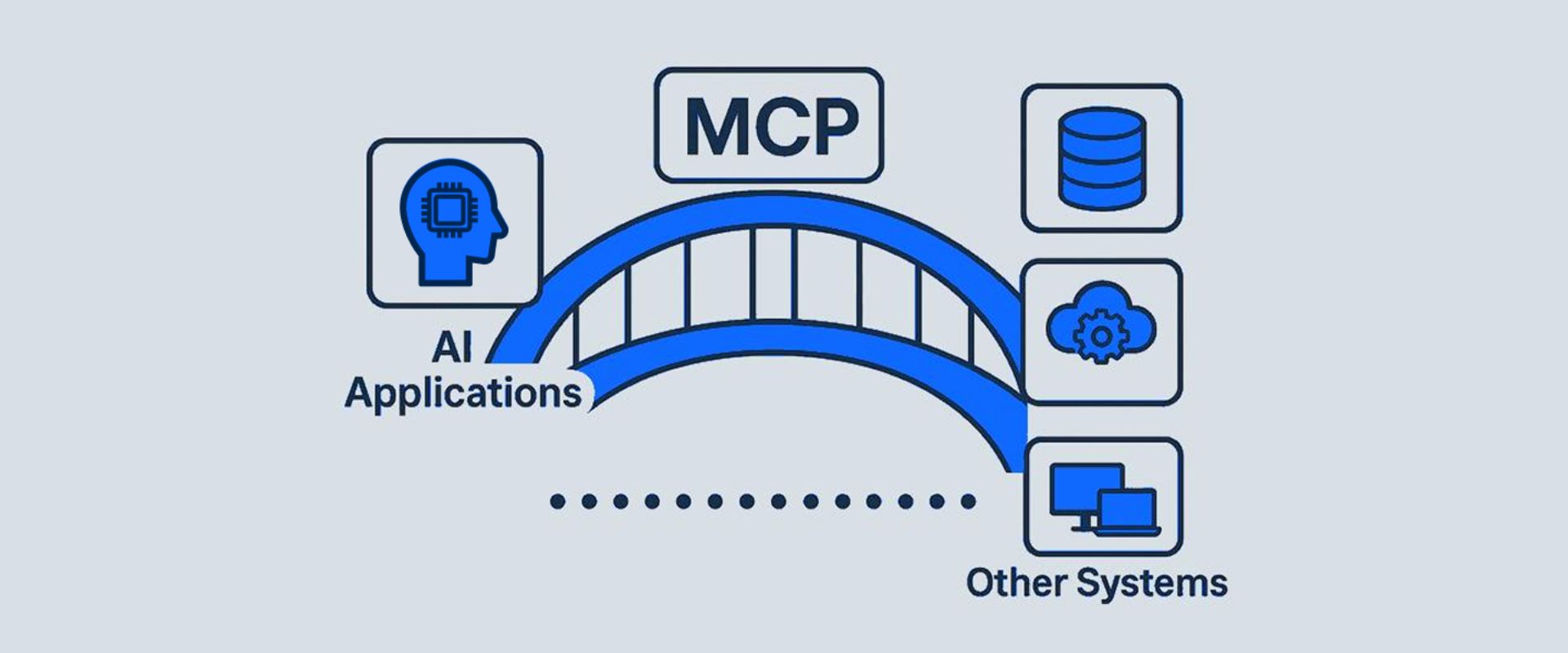
MCP acts as a universal language between language models and various data sources. MCP servers are provided to the language model. This enables the model to communicate with connected systems in a structured manner. The LLM “knows” when to query which data source via which MCP server. It then receives the responses in a comprehensible, structured format.
Using MCPs is an important step forward in the use of AI. MCPs enable AI applications to:
- Interact independently with the enterprise systems required for a specific task,
- Access the latest data in the required format, and
- Execute actions in peripheral systems that previously required a human agent.
How does the Model Context Protocol work?
MCP has three key components:
1. MCP client (e.g., an agent or a company-specific chatbot with a connected LLM)
The MCP client sends a request to the MCP server. For example, the client asks the server to execute a particular function or retrieve specific information. The MCP client receives the response and then provides it to the user or agent.
2. MCP server (e.g., an abstraction layer above a CRM system)
The server receives requests from the client and translates them into API calls for the target system. It then provides structured responses to the MCP client.
3. Systems, applications, and tools (e.g., Jira, Salesforce, or Open Datastack)
This is the system that actually provides the data or executes functions.
Standardized communication makes connecting new systems easy. And most importantly, it means there is no need to integrate individual interfaces for the AI application. Your collaboration tool, such as Jira, may already have an MCP server. By contrast, you may need to develop your own MCP server for specialist internal applications.
The illustration below shows possible scenarios for how an AI application can communicate with the target systems: