



Skip to content

Starting point: newhome’s needs
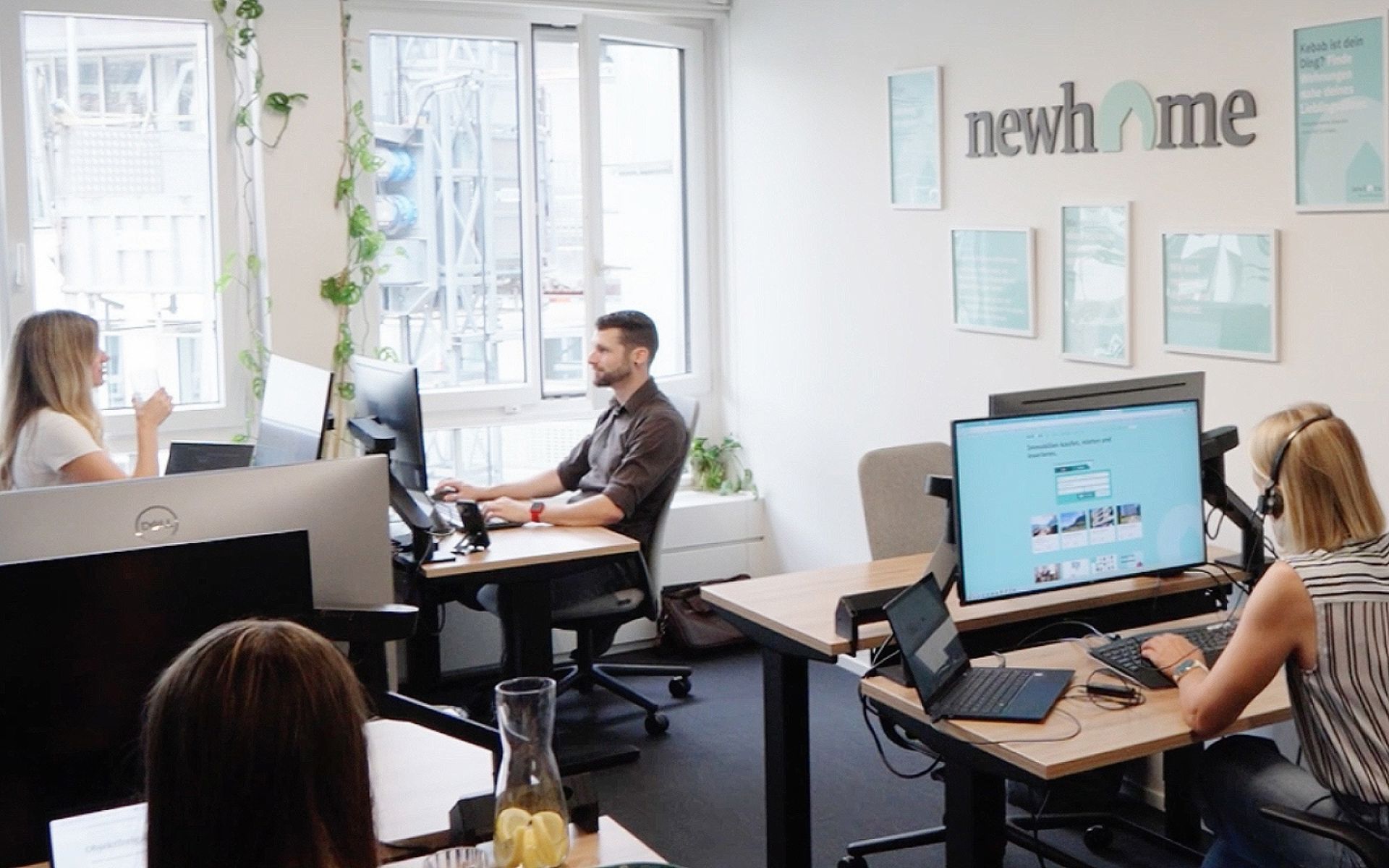
newhome positions itself as Switzerland’s leading regional real estate portal. It is owned by more than 500 real estate companies, 19 cantonal banks, AXA, and CH Media.

Data is key to the digital marketplace: It connects supply and demand, reveals market trends, and forms the basis for managing the business. Until now, this data was scattered across individual applications, third-party providers, and manually exported files. Analyses were carried out in isolation and involved considerable manual effort, with no consistent analyses across multiple sources. The sales, marketing, product management, and customer care departments did not have easy access to reliable metrics. Collaboration relied on data exports. newhome was therefore looking for a central data platform: a single authoritative data basis for managing the business, with self-service access for its departments and an open architecture without vendor lock-in.
Bronze at Best of Swiss Software in the “Data Platforms” category

“The platform is based on open source and operated in the cloud. The solution is designed to support strategic business development. Users can interact with the data via an open-weight language model, which uses the semantic data layer to automatically generate database queries. Data quality in the system is automatically checked and improved.”

Best of Swiss Software 2026 jury statement
 

From source to dashboard

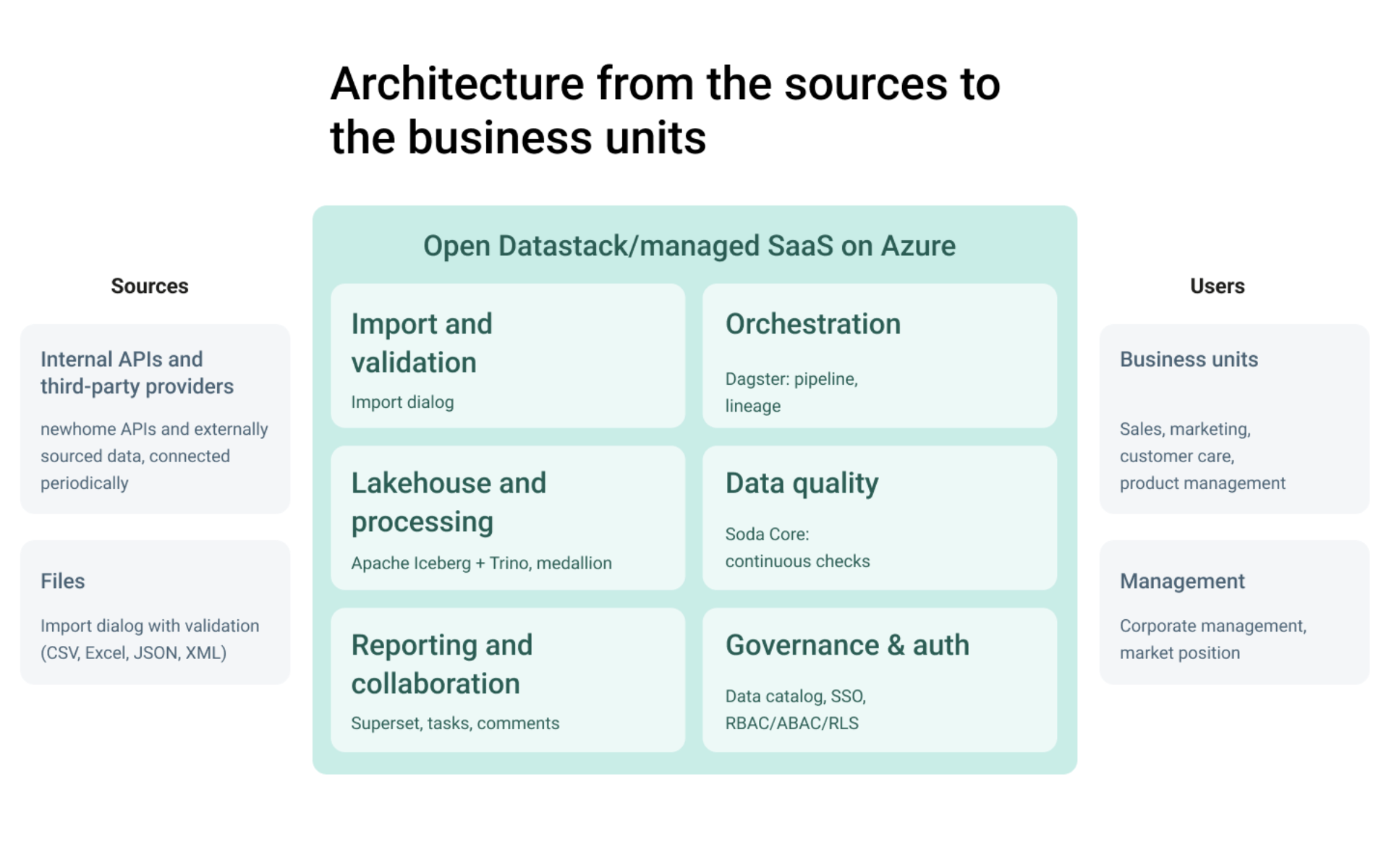
newhome opted for Open Datastack, ti&m’s modular open-source data platform. It covers the entire data journey and runs on Azure as a fully managed SaaS solution for newhome. newhome’s internal APIs and third-party data sources are connected at regular intervals. Employees upload files using an import dialog that validates the data upon upload.

Dagster orchestrates the pipelines and progressively refines and enriches the data as it moves through the medallion architecture: from raw data to validated, cleansed data and finally to business aggregations. The data is stored in a lakehouse based on the open table format Apache Iceberg and queried with Trino, following open standards rather than proprietary lakehouse platforms. Storage and compute are decoupled and can be scaled independently. Soda Core runs automated data quality checks, while ML-based pipelines detect anomalies. End-to-end lineage makes every data flow traceable from source to dashboard.
 

Self-service and collaboration in the data context

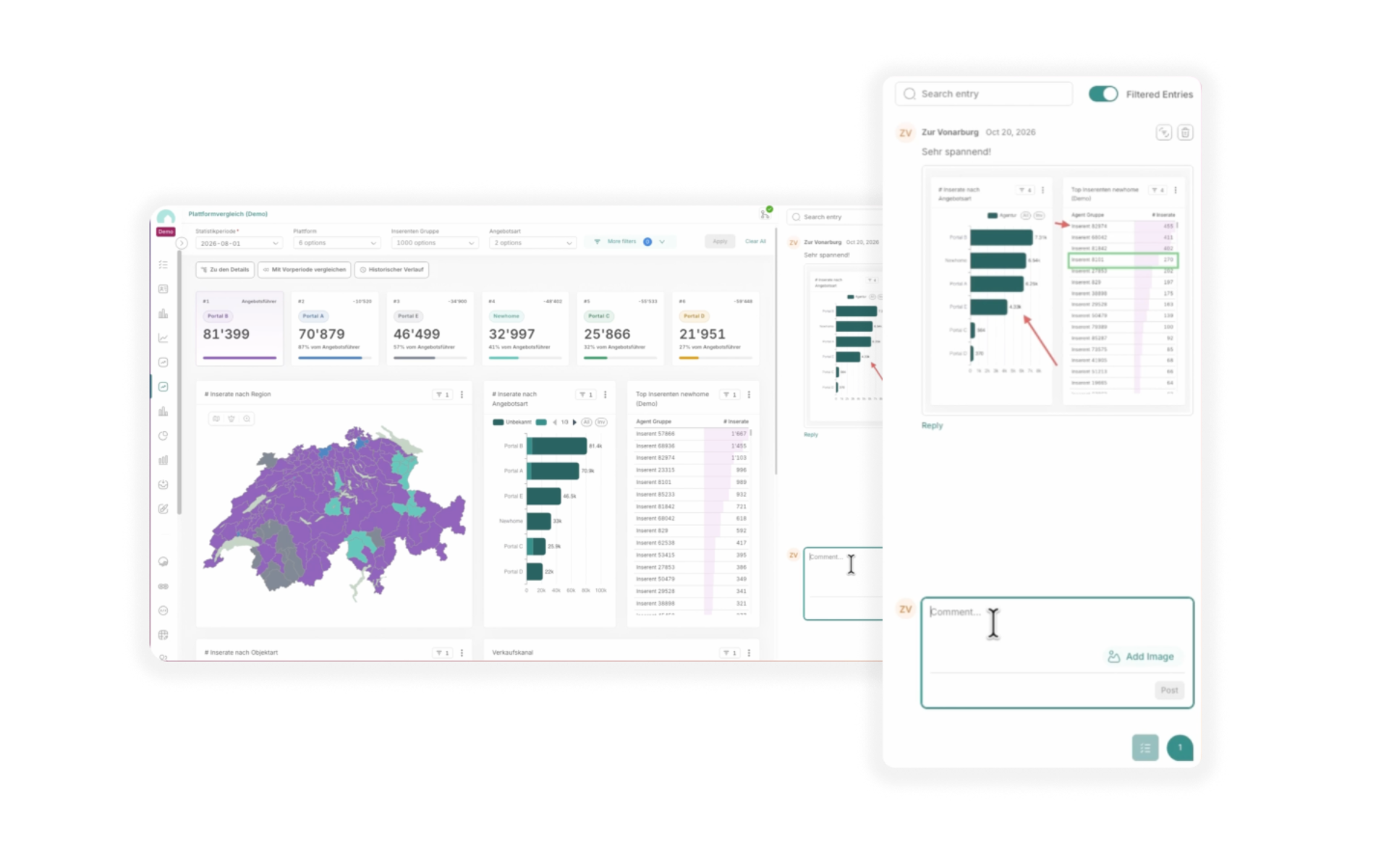
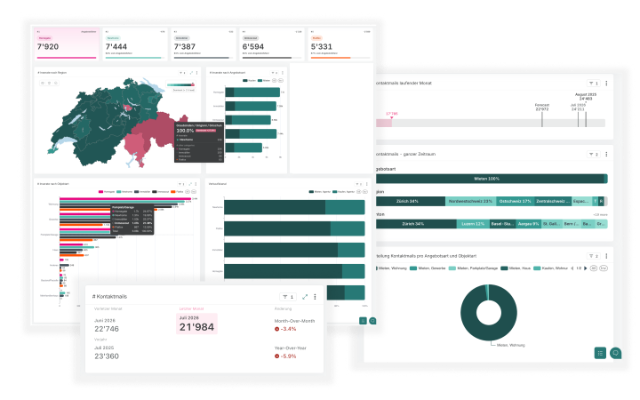
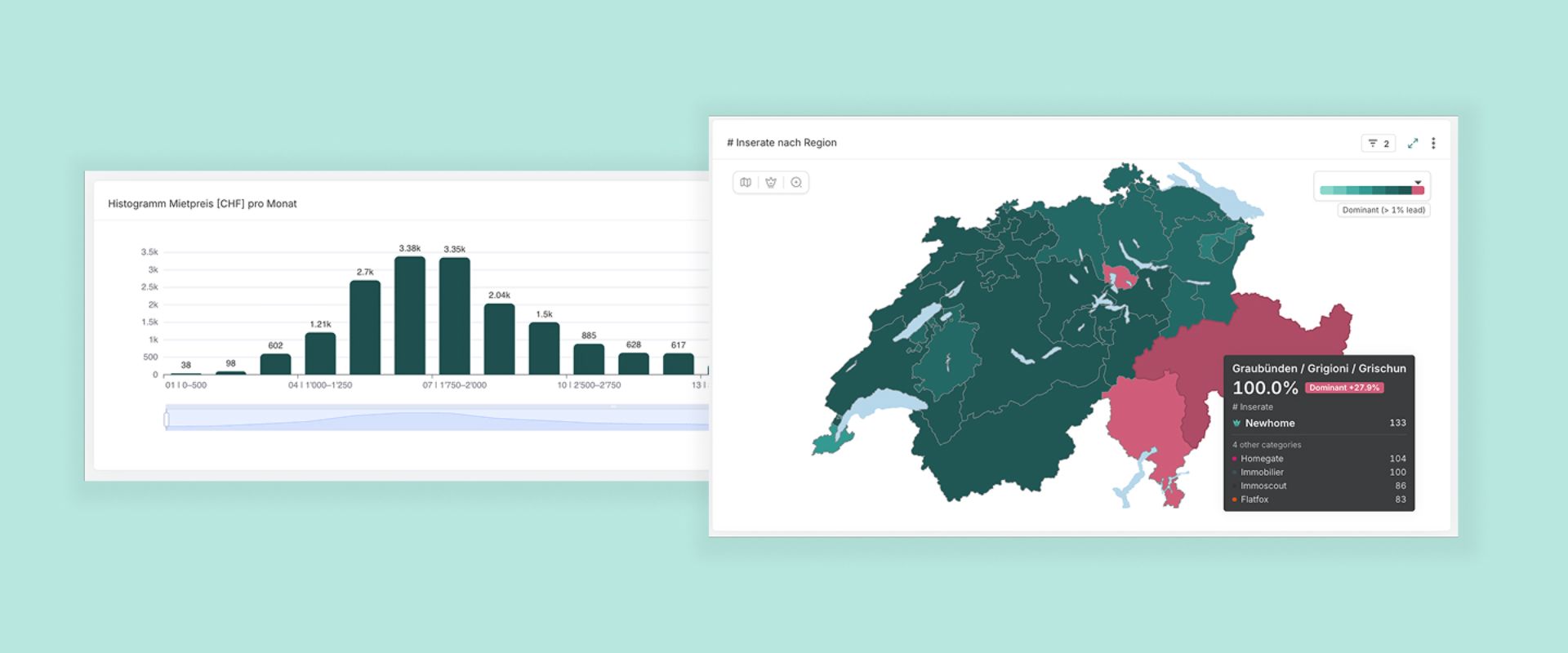
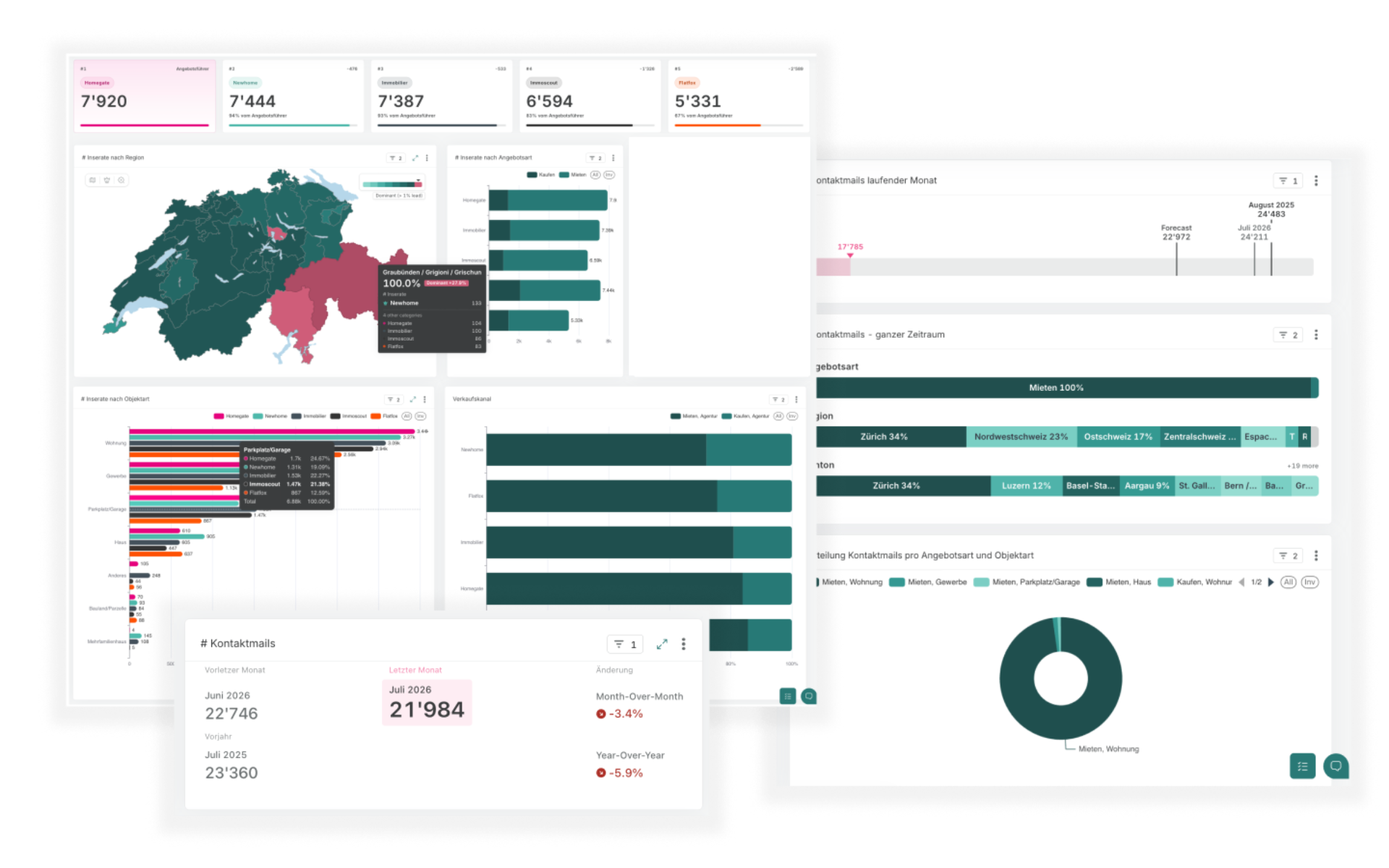
Apache Superset visualizes the data in interactive dashboards in newhome’s corporate design, including market position reports and senior-level dashboards for managing the business. Business units can create their own analyses using drag-and-drop, without any prior technical knowledge or having to involve IT. Linked dashboards with app-like navigation track entire processes.

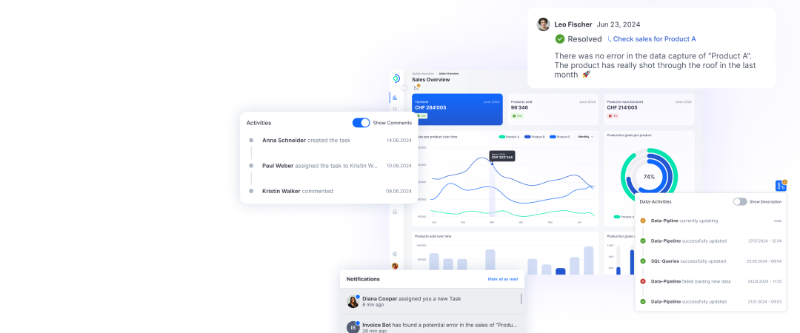
Open Datastack adds collaboration features to the dashboards. Comments and tasks are directly linked to a dashboard and its filter context. Notifications alert users to data events, while in-app screenshots with annotation capabilities can be included in discussions. Processing and validation status indicators show directly in the dashboard how up to date a metric is and whether it has been verified.
 

“I used to spend an entire day gathering data for our market update. Now I can do it in just five minutes.”

– Andrin Tschan, Business Data Analyst, newhome
Ready to transform your data? Discover Open Datastack in a demo.

Request a demo

Sovereign and secure

All dashboards, charts, and pipelines are created using open-source tools and can still be used even without Open Datastack. If the platform were to be decommissioned, newhome would receive the complete source code. Costs stay transparent: because the entire data platform and its reporting run on a single license, newhome has a clear, predictable total cost of ownership (TCO). ti&m ensures the long-term operation of the open-source components through technology scouting, proactive patch management, and its own forks or alternative solutions.

Authentication is handled via single sign-on (SSO) through newhome’s identity provider. Access is controlled through role-based (RBAC), attribute-based (ABAC), and row-level (RLS) access control. Crucially, the built-in data catalog serves as a single source of truth for managing these permissions – resolving a common pain point of existing solutions, where access rules are scattered across tools. Every access is fully logged, and the platform is operated in isolated Kubernetes environments.

A System Health Dashboard is included out of the box. It gives a complete, transparent view of platform usage and health, analyzes pipeline queries, and suggests optimizations. This lets newhome spot issues early and run the platform efficiently and reliably.

The result: Everyone works with the same data

A joint team, formed of newhome and ti&m employees, analyzed the existing data processes and developed reports and analyses in collaboration with the business units. Thanks to proven blueprints and configurable components, the project took roughly six months to complete, and the platform has been live since July 1, 2026.

Today, all newhome employees use Open Datastack, and 25 users work with more than ten dashboards. Where two employees previously had to consolidate reports manually in Excel, the data is now processed automatically and updated daily. newhome implements new requirements independently or in collaboration with ti&m: A new dashboard, including data modeling, takes half a person-day to a full person-day, while a new data pipeline takes one to two person-days.
 

Looking ahead: AI-ready

With Open Datastack, newhome has also laid the data foundation for AI applications. Its AI-readiness rests on two building blocks. The first is a Model Context Protocol (MCP) interface, through which AI applications and agents access the data under the same fine-grained permissions as users, with comprehensive logging. The second is the data catalog: during AI-assisted development it is automatically enriched with business context and governs which datasets an AI may query for which use case, which KPIs apply, and – through its usage policies – how they should be used. The “grain” defines what a single row represents, so results stay unambiguous. On this foundation, newhome can build a wide range of AI applications directly on the platform: from LLM use cases and RAG approaches to classic machine-learning models and time-series forecasting with a foundation model (Chronos-2), without a dedicated data-science project. At the same time, newhome benefits from the product’s ongoing development without incurring any development costs itself.

“With Open Datastack, we have a future-proof data platform that helps us integrate new data sources faster, better understand relationships, and turn insights into business value more effectively. At the same time, we are strengthening our digital sovereignty.”

– Dr. Roman Timm, CEO newhome

Webinar

How newhome uses Open Datastack to make data truly usable

A live look at a real-world implementation: See how newhome consolidates diverse data sources into a central lakehouse, models the data, and makes it available for reporting and self-service analytics.

AI-powered Engineering Zurich

Dieter Abplanalp

Your data, your control: Discover Open Datastack.